
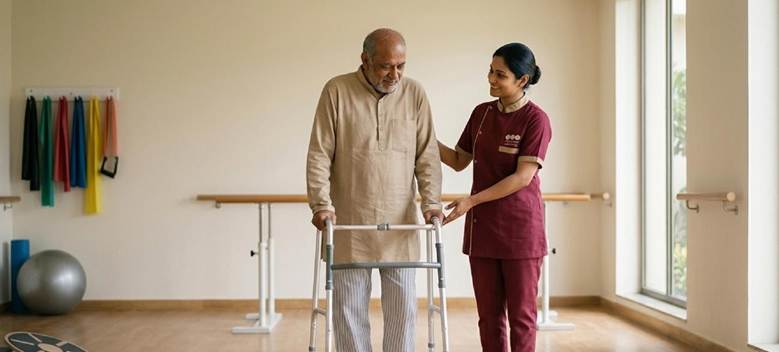
The first few days after a stroke or paralysis diagnosis are overwhelming. But what most families don’t expect is this recovery is not one big step; it is built through small, structured daily actions.
One of the biggest gaps at home is routine. Families try their best, but without a clear plan, recovery becomes inconsistent.
This is where a structured daily routine for recovery after stroke plays a critical role. In a care home setting, every hour is planned with purpose helping patients regain movement, confidence, and independence.
Why Routine Matters in Recovery After Stroke
After a stroke, the brain needs repetition to rewire itself. This process is called neuroplasticity.
Globally, studies show that early and consistent rehabilitation can improve functional recovery by up to 30–40%. In India, however, many patients miss this window due to lack of structured care.
A proper recovery after stroke plan ensures:
- Regular movement
- Muscle activation
- Prevention of complications
- Faster functional gains
Without routine, even the best paralysis treatment can fall short.
What a Structured Day Looks Like in Paralysis Rehabilitation
In a medically supervised environment, the day is not random. It is planned.
A well-designed routine supports paralysis rehabilitation by balancing activity, rest, nutrition, and monitoring.
Let’s walk through a practical day plan.
Morning: Gentle Activation & Mobility
The day usually begins early, around 6:30–7:30 AM.
Focus Areas:
- Assisted sitting and positioning
- Range of motion (ROM) exercises
- Breathing exercises
- Hygiene support
This phase is important for recovery after stroke because stiffness builds overnight.
Care teams ensure:
- Proper limb positioning to prevent contractures
- Gentle joint movement
- Skin checks to avoid pressure sores
Early morning sessions often include basic paralysis rehabilitation movements to activate muscles safely.
Breakfast & Medication Support
Nutrition plays a big role in paralysis treatment.
Patients are given:
- Balanced meals based on medical condition
- Hydration monitoring
- Medication as per schedule
Swallowing difficulties are common in stroke patients. Care teams monitor this closely.
This step supports overall recovery after stroke by improving energy levels and healing.
Mid-Morning: Structured Physiotherapy
This is the most important part of the day.
What Happens:
- Guided physiotherapy sessions
- Strength and balance training
- Assisted walking (if possible)
- Hand and grip exercises
These sessions are the backbone of paralysis rehabilitation.
For example:
- Repetitive arm movements to regain control
- Leg exercises to improve walking ability
- Balance training to prevent falls
Consistency here defines progress in recovery after stroke.
Late Morning: Rest & Monitoring
After therapy, rest is equally important.
During this time:
- Vitals are monitored
- Pain levels are checked
- Positioning is adjusted
In proper paralysis treatment, rest is not passive—it is managed.
Care teams ensure:
- Pressure relief (changing positions every 2–3 hours)
- Comfortable support with cushions or aids
This prevents complications and supports long-term paralysis rehabilitation.
Afternoon: Functional Training & Daily Activities
This is where recovery becomes practical.
Focus Areas:
- Sitting independently
- Eating with support
- Basic self-care activities
These activities are critical for real-life recovery after stroke.
Instead of just exercises, patients practice:
- Holding a spoon
- Standing with support
- Moving from bed to chair
This stage bridges therapy and independence in paralysis treatment.
Evening: Light Activity & Engagement
Recovery is not just physical, it is emotional too.
Evenings include:
- Light walking practice
- Cognitive activities
- Social interaction
Mental health plays a big role in paralysis rehabilitation.
Patients who stay engaged show better outcomes in recovery after stroke.
Night: Safety, Comfort & Monitoring
Night care is often ignored at home but it is critical.
Care teams focus on:
- Safe positioning
- Fall prevention
- Monitoring discomfort
Proper night care supports continuous paralysis treatment and prevents setbacks.
Why This Routine is Hard to Maintain at Home
Families often start with good intent. But challenges come up:
- No structured schedule
- Lack of trained physiotherapists
- Irregular exercises
- Difficulty handling patient mobility
For example, missing even a few sessions of paralysis rehabilitation can slow progress.
Similarly, inconsistent effort in recovery after stroke can lead to stiffness and dependency.
This is where professional environments make a difference.
Importance of an Established Care Provider
Recovery needs consistency, expertise, and systems.
Established care homes bring:
- Doctor-led protocols
- Daily physiotherapy plans
- Trained caregivers
- Emergency readiness
They ensure that paralysis treatment is not left to guesswork.
More importantly, they follow structured programs for paralysis rehabilitation, which improves outcomes.
Real-Life Caregiving Trigger
A son in Bangalore shared:
“We tried managing my father’s recovery at home after his stroke. But without a fixed routine, some days of exercise happened, some days they didn’t. Once we moved to a care home, the daily structure made a visible difference in his recovery after stroke.”
Clinical Insight
As rehabilitation experts often say:
“Consistency matters more than intensity. Daily structured paralysis rehabilitation leads to better functional recovery than irregular high-effort sessions.”
Cost Disclaimer
The cost of paralysis treatment in a care home depends on:
- Level of medical support
- Physiotherapy intensity
- City and facility
Disclaimer: Costs vary widely across India. It is important to evaluate the quality of care, not just pricing.
FAQs (High Intent)
1. What is the best routine for recovery after stroke?
A structured routine with physiotherapy, monitoring, nutrition, and rest is essential for effective recovery after stroke.
- How important is daily physiotherapy in paralysis rehabilitation?
Very important. Daily sessions help improve movement, strength, and independence in paralysis rehabilitation.
- Can paralysis treatment be done at home?
It can be started at home, but maintaining consistency and quality of paralysis treatment is often challenging without professional support.
- How long does recovery after stroke take?
Recovery varies for each patient. Early and consistent recovery after stroke routines improve outcomes.
- Why choose a care home for paralysis rehabilitation?
Care homes provide structured routines, trained staff, and medical supervision, which are critical for effective paralysis rehabilitation.
Conclusion
Recovery is not about one big breakthrough. It is about showing up every day.
A structured routine ensures:
- Steady progress
- Reduced complications
- Better independence
Whether at home or in a care facility, the key to recovery after stroke is consistency.
Because in paralysis care, what you do every day matters more than what you do occasionally.