
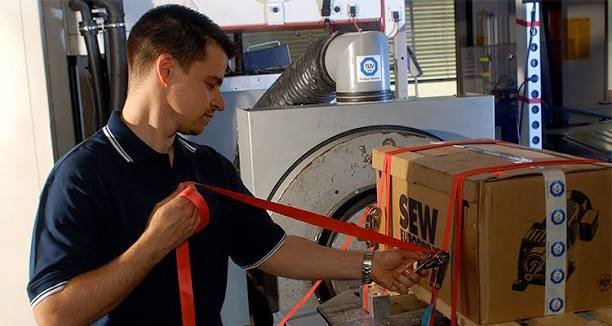
Physical stresses are experienced by products in international shipping. Packages can be placed in containers, picked up and transported by forklift, loaded onto trucks, moved between warehouses, and moved multiple times to the customer. On the way, vibration, compression, impact, temperature and moisture can all impact packaging performance.
A package may appear intact when it’s sent from the factory and end up damaged at its destination. Expensive returns and customer complaints can be caused by crushed cartons, broken containers, leaking products, and damaged labels. So packaging reliability should be tested in a way that mimics the real transportation environment, and not just by looking at it.
Why Packaging Reliability Matters in International Logistics
Long-distance transport involves risks which may not occur in domestic distribution. Products can be in transit for days and weeks, and handled multiple times through various logistics systems. Other factors that can affect shipping conditions are the route, mode of transport, season, and destination.
Here, Packaging quality inspection comes in handy. It assists manufacturers to determine if packaging will protect their product along the distribution chain. An effective assessment takes into account the strength of the cartons, closures, cushioning materials, seals, labels and other elements that affect the performance of the package.
Key Packaging Tests for International Shipments
There are several types of packaging reliability testing to mimic stresses the products may encounter during shipping. The tests vary according to the product, packaging design, shipping method, and environmental conditions.
- Compression Testing: Establishes the amount of downward pressure a carton or container can withstand before it is squashed or collapses.
- Drop Testing: Emulates unintentional falls when manually handling and transporting.
- Vibration Testing: Simulates repeated motion that occurs during the movement of a truck, rail, aircraft or ship.
- Impact Testing: Assesses the response of packaging to a sudden impact when handling.
- Seal Integrity Testing: tests to determine if seal and closure will prevent leakage or contamination.
- Environmental Testing: Tests the performance of packaging in changes of temperature and humidity.
- Stacking Testing: Identifies if packages are able to support the weight of other packages during the storage and transportation process in the warehouse.
These tests shouldn’t be selected randomly. The first step in a good testing program is an understanding of the actual supply chain. For instance, packaging used in air freight can be subject to different risks than those used in sea or truck.
Understanding Compression and Stacking Performance
When products are being shipped in stacked cartons, compression strength is of special concern. Several packages can be placed on top of the lower boxes, putting continuous pressure on the packaging structure. In the event the material is not robust enough, cartons may buckle or collapse.
Testing can be used to determine if packaging will retain its integrity under these conditions. Engineers can determine the strength of the carton, the strength of the board, the strength of the internal supports and load distribution. The results can then be used to make changes to the package design prior to large scale production.
The Role of Vibration and Impact Testing
Transportation isn’t a smooth journey. Uneven roads are a problem for trucks, handling shocks for aircraft, and ocean transport for cargo containers. The repetitive actions can weaken the packaging over time, or move the product within the packaging.
Vibration testing is an effort to simulate these transportation stresses in a controlled environment. The impact testing is an additional test that mimics sudden shocks. These techniques can identify issues like broken closures, cracked containers, broken cushioning, or product movement that may not be apparent from a visual inspection.
Transit Damage Analysis and Root Causes
If the packages are damaged, replacing the packaging may not resolve the issue. Manufacturers must know the reason for the failure. Did the carton fail to be strong enough? Is there a problem with the cushioning inside? Was the package incorrectly stacked? Or was there too much movement along the way?
Transit damage analysis links physical evidence with transportation conditions. Damage to packaging, product positioning, impact marks, compression points, moisture exposure can all be inspected. This information enables companies to understand the root cause of the issues and make targeted changes, instead of assuming and making costly changes.
Challenges in Packaging Reliability Testing
A challenge is to accurately simulate the real world transportation environment. A lab test can simulate vibration or compression, but in reality, shipments are subjected to several stresses simultaneously. The effects of temperature, humidity, handling, stacking, and vibration can be complicated and hard to reproduce exactly.
An additional hurdle is to balance protection with cost and sustainability. Improved packaging can help protect the product but can also lead to higher material use, shipping weight and storage needs. The development of modern packaging should therefore be taken into account at the same time as the durability, cost, efficiency of materials, and environmental impact.
Building a Reliable Packaging Validation Program
A robust validation program should start at the packaging design stage and not when products are in distribution. Engineers are able to recognize the transportation hazards, determine the performance requirements, and choose the right tests for the product and supply chain.
Retesting should be done after significant changes are made. If a new carton material, closure system, supplier, product weight or shipping route is used, it can change the performance of the packaging. Ongoing validation helps to maintain packaging reliability throughout production and distribution.
Conclusion
International shipping presents a challenging packaging situation. Products must be able to resist compression, vibration, impact, stacking, handling, and environmental conditions without losing their structural integrity. Systematic testing can help manufacturers find the weak points before it becomes a regular business issue with damaged shipments.
The Pre-shipment inspection is yet another critical stage before the goods are shipped to the international logistics network, if the inspection is properly planned. In addition to laboratory testing and transit analysis, it can be used in conjunction with ongoing packaging improvements to minimize damage, enhance shipment reliability, and ensure that products arrive to customers in the condition in which they were intended.